The committee has a charge. The initiative has a chair. The leadership team agrees the work matters.
There is even a timeline, a list of deliverables, and a standing meeting on everyone’s calendar.
Then comes a seemingly straightforward question: Who can approve the next step?
Silence.
The chair thought the executive sponsor had authority. The sponsor assumed the committee could make the decision. Someone suggests checking with Legal. Another person recommends bringing it back to the leadership team.
Three meetings later, the initiative is still on the agenda. The people responsible for moving it forward are still waiting.
Sound familiar?
This is one of the more frustrating realities of leadership, particularly in healthcare and professional organizations. We are often quite comfortable assigning responsibility. We are considerably less deliberate about defining the authority that should accompany it.
And the consequences extend well beyond another meeting.
When Leadership Comes Without the Levers
Consider a physician asked to lead a patient access improvement initiative. She is accountable for reducing delays, but scheduling templates belong to department administrators, staffing decisions sit elsewhere, and technology changes require approval from another team.
Or a medtech leader charged with improving collaboration between clinical, commercial, and operational teams. Everyone supports the goal, but the leader has limited authority to change processes across those functions.
Now consider a newly elected professional society president or committee chair. They have an ambitious agenda, committed volunteers, and perhaps only a year or two to deliver meaningful progress. Yet staffing, budgets, communications, and final approvals may rest with an executive director, board, or another governing body.
Different settings. Similar challenge.
The person expected to deliver results does not necessarily control the decisions required to produce them.
And leadership without direct reports or budget authority is hardly unusual. Much of the work that advances healthcare depends on influence, shared ownership, professional relationships, and people willing to contribute beyond their formal job descriptions.
Those relationships are valuable. They are often what make progress possible.
But they should not have to compensate for an organizational structure that leaves decision-making authority to guesswork.
The Hidden Cost of Unclear Authority
When authority is poorly defined, capable leaders become exceptionally skilled at navigating around it.
They learn whom to call, which conversations to have before the official meeting, and how to frame a request so that it has a better chance of moving forward.
Sometimes this is simply good leadership. Relationships, judgment, and diplomacy matter.
The problem arises when these informal pathways become the only reliable way to get anything done.
A few predictable patterns emerge:
- Decisions get recycled. Teams revisit issues because no one is certain who can make the final call.
- Momentum depends on personalities. Progress accelerates when the right person intervenes, rather than through a dependable process.
- Accountability becomes uneven. Initiative leaders are evaluated on outcomes influenced by decisions outside their control.
- Engagement begins to erode. Volunteers and team members who initially brought energy to the work struggle to see how their contributions translate into action.
Over time, organizations can mistake this friction for a leadership or engagement problem.
Perhaps the chair needs to be more assertive. Maybe the team needs another meeting. Perhaps people simply need to collaborate better.
Those explanations may occasionally be valid. But before we ask someone to lead more effectively, we should examine whether we have given them a workable path to lead.
Three Questions Worth Asking Before the Next Meeting
Whether you are launching a new initiative, appointing a committee chair, or accepting a leadership responsibility yourself, three questions can reveal quite a bit about how prepared the organization is to support the work.
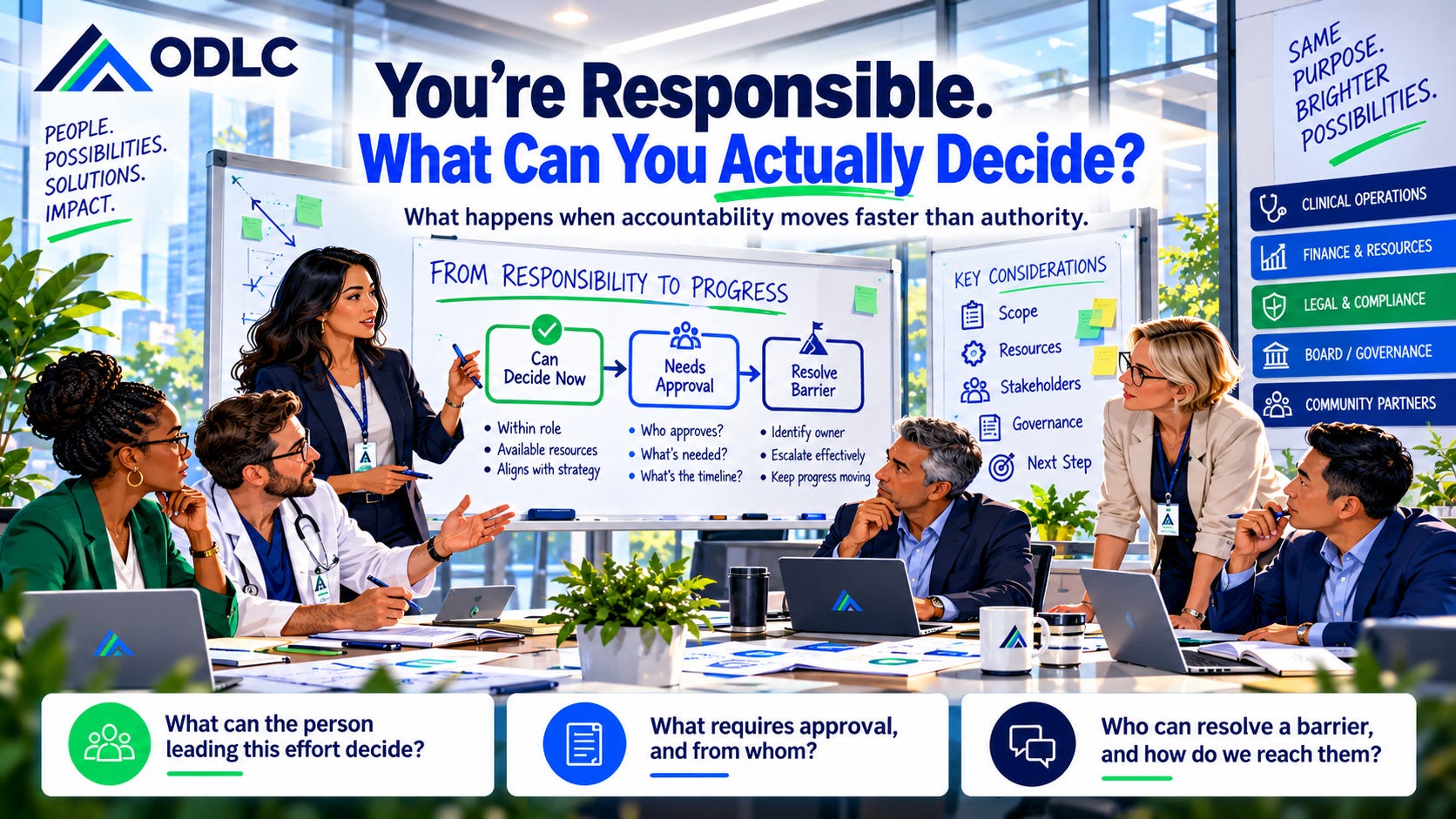
1. What can the person leading this effort decide?
Be specific. Can they establish priorities, adjust timelines, convene stakeholders, modify workflows, or allocate existing resources?
Not every leader needs unrestricted authority. But they should know which decisions are theirs to make without seeking permission.
2. What requires approval, and from whom?
Some decisions appropriately belong to executive sponsors, governing boards, finance teams, or other accountable leaders.
Identify those boundaries early. Define who approves what, what information they need, and when decisions can reasonably be expected.
A decision pathway is far more useful than a vague promise of leadership support.
3. Who can resolve a barrier, and how do we reach them?
Even well-designed initiatives encounter competing priorities, resource constraints, and unexpected challenges.
An escalation pathway gives the person leading the work somewhere to go when progress stalls. It should identify a decision-maker who can resolve the issue or bring the appropriate people together.
These three questions take relatively little time to answer. Leaving them unanswered can consume months.
From Leadership Insight to Leadership Action
A new resource! A few minutes of reflection. A clearer picture of what’s working, what’s missing, and where to focus next.
In our strategy work, we spend a great deal of time exploring what helps leaders move meaningful work forward. One recurring lesson is that individual commitment, while essential, cannot substitute for organizational readiness.
That is also part of the thinking behind a new resource from Dynamize Health, our leadership development and advisory counterpart.
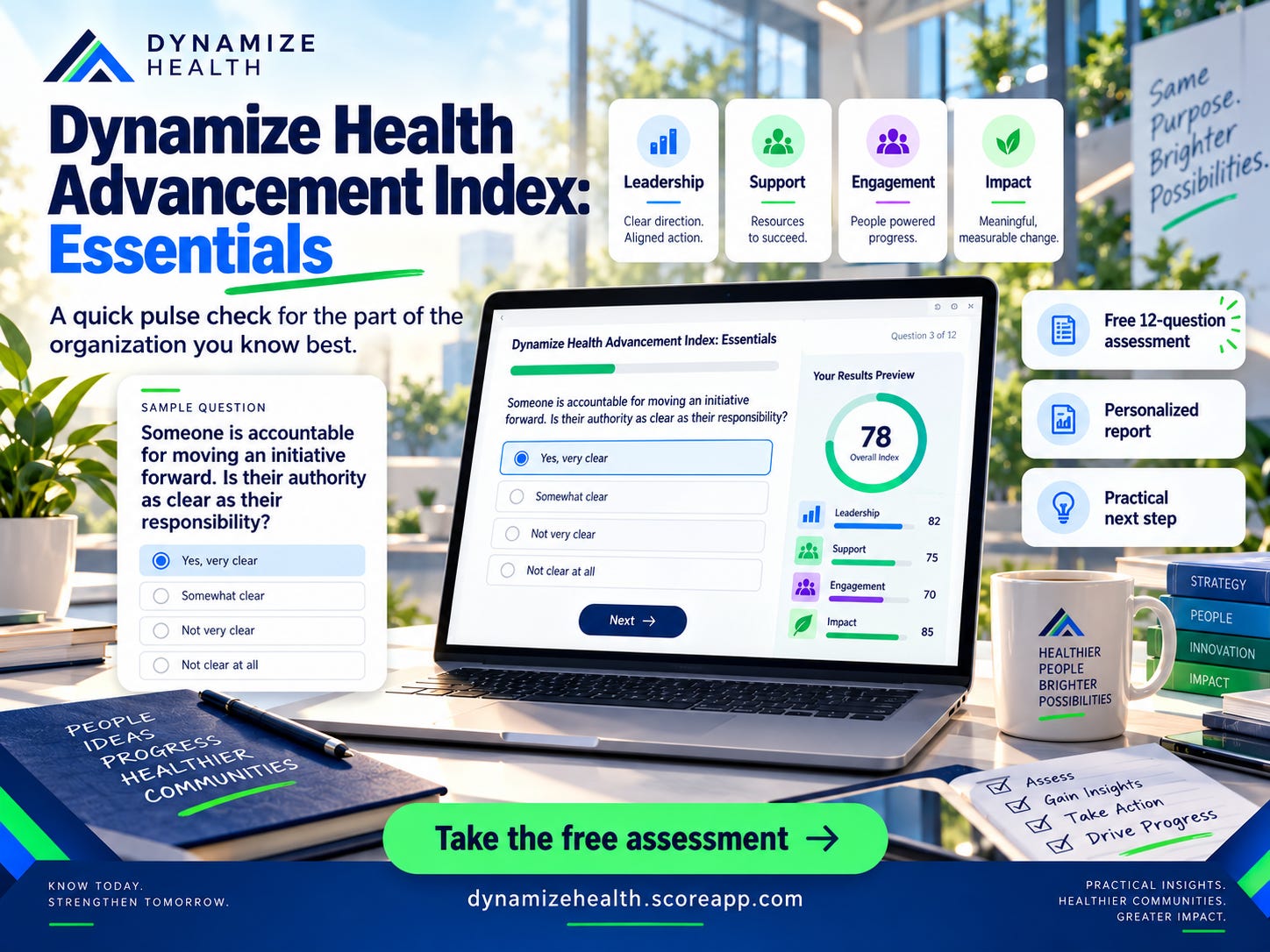
The Dynamize Health Advancement Index: Essentials is a newly launched, free 12-question assessment exploring four areas: Leadership, Support, Engagement, and Impact.
One question connects directly to this Insight:
“Someone is accountable for moving an initiative forward. Is their authority as clear as their responsibility?”
It’s a useful question precisely because the answer may differ depending on where you sit.
Participants respond based on their perspective of the organization, department, team, or other part of the organization they know best. They receive a personalized report highlighting their responses and a practical next step.
It is a starting point for reflection and conversation, rather than a comprehensive organizational diagnosis.
Sometimes the most useful insight is recognizing which question your team has not yet asked.